
Traveling abroad is an incredible experience, but international airfare often takes the biggest bite out of your budget. Many travelers assume expensive tickets are unavoidable, yet the reality is different. With the right booking strategy, timing, and tools, you can often save hundreds of dollars on the same flight.
This Guide to Finding Cheap International Flights explains exactly how experienced travelers consistently book affordable tickets. From choosing the right booking dates to using flight comparison tools, understanding airline pricing, and avoiding common mistakes, you’ll learn practical techniques that work in real life.
Whether you’re planning a vacation, business trip, honeymoon, or backpacking adventure, these tips will help you spend less on flights and more on enjoying your destination.
Why International Flights Can Be So Expensive
International airfare isn’t based solely on distance. Airlines constantly adjust prices depending on demand, competition, fuel costs, holidays, booking patterns, and available seats.
Some of the biggest factors influencing ticket prices include:
- Travel season
- Day of departure
- Booking window
- Airport popularity
- Airline competition
- Route demand
- Cabin class
- Remaining seat inventory
Understanding these factors gives you an advantage when searching for cheaper fares.
Common Reasons Travelers Overpay
Many people unknowingly pay more because they:
- Book during holiday rush periods
- Search only one airline website
- Ignore nearby airports
- Wait until the last minute
- Always travel on weekends
- Don’t compare multiple booking platforms
- Skip fare alerts
Fortunately, every one of these mistakes is easy to avoid.
Best Time to Book Cheap International Flights

Timing is one of the biggest factors when searching for affordable airfare. While no airline follows one universal pricing formula, booking too early or too late can significantly increase costs.
How Far in Advance Should You Book?
Generally, these booking windows offer the best balance between availability and pricing.
| Travel Type | Recommended Booking Window |
|---|---|
| International Economy | 2–6 months before departure |
| Peak Holiday Travel | 5–9 months ahead |
| Summer Vacation | 3–7 months ahead |
| Business Travel | 2–4 months ahead |
| Last-Minute Travel | 2–6 weeks if flexible |
These ranges aren’t guaranteed but often provide better opportunities than booking only a few days before departure.
Cheapest Days to Fly
Although airfare changes constantly, certain departure days tend to offer lower average prices because demand is lower.
Flights are often cheaper when departing on:
- Tuesday
- Wednesday
- Thursday
Flights are usually more expensive on:
- Friday evenings
- Saturdays
- Sundays
- Major public holidays
If your schedule is flexible by even one or two days, you may notice meaningful savings.
Use Flight Comparison Websites Before Booking
One of the easiest ways to save money is to compare fares across multiple booking platforms instead of relying on a single airline website.
Different platforms sometimes display different prices because of:
- Promotions
- Regional pricing
- Partner agreements
- Currency differences
- Exclusive discounts
Benefits of Flight Comparison Tools
Flight comparison websites allow you to:
- Compare dozens of airlines instantly
- Discover cheaper travel dates
- View flexible fare calendars
- Mix airlines for lower prices
- Compare layovers
- Check baggage policies
- Track price changes
Popular Flight Comparison Platforms
| Platform | Best For | Advantages | Limitations |
|---|---|---|---|
| Google Flights | Fast searches | Excellent calendar view | Doesn’t always show every OTA |
| Skyscanner | Flexible destinations | Wide airline coverage | Prices may change during booking |
| Kayak | Fare tracking | Good filtering options | Some deals redirect elsewhere |
| Momondo | Hidden deals | Great for flexible travelers | Interface can feel busy |
| Expedia | Flight + hotel bundles | Package discounts | Standalone fares may not always be lowest |
| Booking.com Flights | Simple booking | Easy interface | Route availability varies |
Never stop after checking just one website. Spending five extra minutes comparing prices can save a surprising amount.
Be Flexible With Your Travel Dates

Flexibility is one of the most effective ways to reduce airfare.
Changing your departure by only a day or two can sometimes lower ticket prices dramatically because airlines constantly adjust fares based on demand.
Use Flexible Date Search

Many booking platforms allow you to search:
- Entire month
- Cheapest month
- Flexible calendar
- Nearby dates
Instead of searching for one fixed departure date, compare several surrounding days before making your final decision.
Avoid Peak Travel Periods

Prices usually increase during:
- Christmas
- New Year
- Easter
- School vacations
- Summer holidays
- Long weekends
- Major festivals
Traveling immediately before or after these busy periods often results in much cheaper fares.
Consider Nearby Airports

Many travelers only search flights from their closest airport, but expanding your search radius can uncover significantly cheaper options.
Large cities often have multiple international airports served by different airlines and low-cost carriers.
Examples
Instead of flying:
- Into Heathrow, compare Gatwick or Stansted.
- Into Paris Charles de Gaulle, check Paris Orly.
- Into Tokyo Narita, compare Haneda.
- Into New York JFK, compare Newark or LaGuardia where appropriate.
Likewise, departing from a nearby city may also lower your airfare if ground transportation is affordable.
When Nearby Airports Make Sense

A nearby airport is worth considering if:
- The fare difference is substantial.
- Ground transportation is inexpensive.
- Travel time remains reasonable.
- Baggage costs don’t eliminate the savings.
Sometimes paying a little extra for a train or bus still results in a much lower overall trip cost.
Compare Direct Flights vs Connecting Flights
Many travelers automatically search for non-stop flights because they’re faster and more convenient. While direct flights save time, they aren’t always the most affordable option.
Connecting flights often reduce airfare, especially on long international routes where multiple airlines compete for passengers.
Advantages of Direct Flights
- Shorter overall travel time
- Lower risk of missed connections
- Less travel fatigue
- Simpler baggage handling
- Better for families and business travelers
Advantages of Connecting Flights
- Lower ticket prices
- More airline options
- Opportunity to explore another city during a long layover
- Better availability during peak seasons
Before booking, compare the total travel time, layover duration, baggage rules, and final cost. A cheaper ticket isn’t always the better deal if it adds many hours of travel or extra baggage fees.
Quick Comparison: Cheapest Flight Booking Strategies
| Strategy | Potential Savings | Best For |
|---|---|---|
| Book 2–6 months early | High | Most international trips |
| Compare multiple booking sites | High | Every traveler |
| Be flexible with dates | Very High | Vacation travelers |
| Use nearby airports | Medium to High | Major cities |
| Consider connecting flights | Medium | Long-haul routes |
| Set fare alerts | Medium | Travelers who can wait |
| Travel during off-season | Very High | Flexible travelers |
Set Fare Alerts and Monitor Price Changes
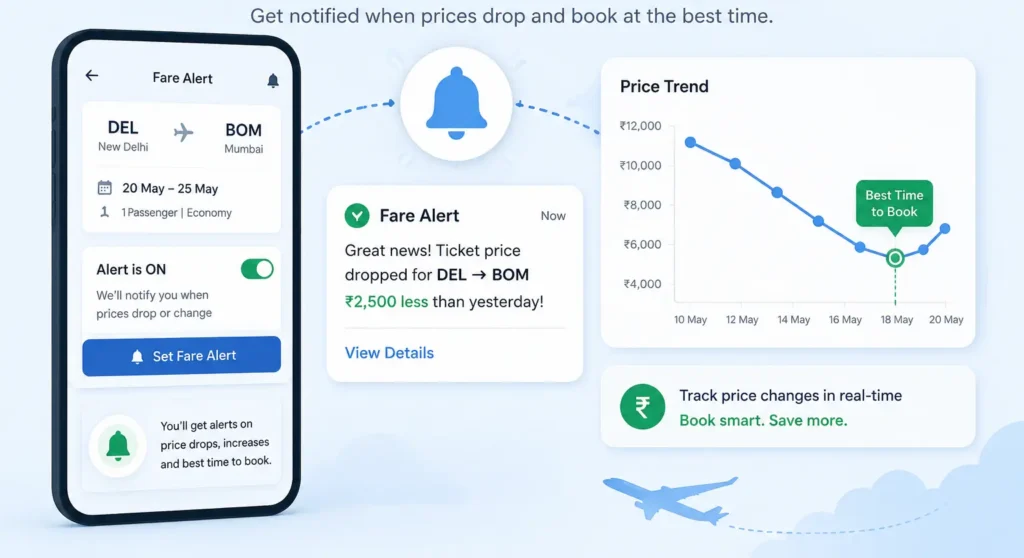
Airline ticket prices can change several times a day. If you are not in a hurry to book, setting fare alerts is one of the easiest ways to catch a lower price.
Most flight comparison platforms allow you to receive email notifications whenever the fare changes for your selected route. Instead of checking prices manually every day, you’ll know when prices drop.
How Fare Alerts Work
The process is simple:
- Search for your preferred route.
- Enable the price alert feature.
- Receive notifications when fares increase or decrease.
- Book when the price fits your budget.
This approach works especially well if your travel dates are still a few months away.
Benefits of Fare Alerts
- Monitor prices automatically.
- Avoid booking too early.
- Spot flash sales quickly.
- Compare long-term pricing trends.
- Save both time and money.
Take Advantage of Airline Rewards and Credit Card Benefits
Many travelers ignore airline loyalty programs because they believe they only benefit frequent flyers. In reality, even occasional travelers can earn rewards that reduce future travel costs.
Joining a loyalty program is usually free and takes only a few minutes.
Airline Loyalty Programs
Benefits often include:
- Earn miles on every flight.
- Redeem miles for future tickets.
- Priority boarding.
- Free seat selection.
- Extra baggage allowance.
- Upgrade opportunities.
If you regularly fly with the same airline alliance, the rewards can add up much faster than expected.
Travel Credit Cards
Some travel-focused credit cards provide benefits such as:
- Welcome bonus points.
- Airport lounge access.
- Complimentary travel insurance.
- Reward points on travel purchases.
- No foreign transaction fees.
- Airline statement credits.
Always compare annual fees with the value of the benefits before applying.
Watch Out for Hidden Costs

A cheap airfare doesn’t always mean a cheap trip. Many airlines advertise low base fares while charging extra for services that were once included.
Before completing your booking, calculate the total cost rather than focusing only on the advertised ticket price.
Common Extra Charges
Be aware of fees for:
- Checked baggage.
- Cabin baggage on budget airlines.
- Seat selection.
- Priority boarding.
- Flight changes.
- Ticket cancellation.
- Meals and drinks.
- Airport check-in.
Compare Total Trip Cost
| Cost Item | Budget Airline | Full-Service Airline |
|---|---|---|
| Base Fare | Usually lower | Usually higher |
| Cabin Bag | May cost extra | Often included |
| Checked Bag | Extra | Often included |
| Meals | Usually paid | Frequently included |
| Seat Selection | Extra | Sometimes included |
| Ticket Flexibility | Limited | Better options |
A slightly more expensive ticket may actually offer better value once all additional fees are included.
Common Mistakes to Avoid When Booking International Flights
Even experienced travelers occasionally make booking mistakes that increase travel costs.
Learning what to avoid is just as important as learning how to find cheap flights.
Booking Mistakes
Avoid these common errors:
- Booking without comparing multiple websites.
- Ignoring nearby airports.
- Waiting until the final week.
- Forgetting baggage fees.
- Entering passenger details incorrectly.
- Not checking passport validity.
- Booking non-refundable tickets without understanding the rules.
- Ignoring visa requirements.
- Choosing extremely short layovers.
- Paying in an unfavorable currency without checking exchange rates.
A few extra minutes of research can prevent expensive problems later.
Pro Tips for Finding Cheap International Flights
Experienced travelers often combine several strategies instead of relying on just one.
Some of the most effective techniques include:
- Search flights in private browsing mode if you want a fresh comparison, while remembering that there is no strong evidence that browsing history alone consistently increases prices.
- Search one-way tickets separately instead of automatically choosing round-trip fares.
- Consider flying into one city and returning from another on multi-city trips.
- Book during airline sales if your destination matches the promotion.
- Travel with carry-on luggage whenever possible.
- Be flexible with your departure airport.
- Check both airline websites and trusted online travel agencies before booking.
- Compare the final checkout price instead of only the advertised fare.
- Avoid peak holiday travel whenever possible.
- Read the cancellation and baggage policies before making payment.
Using several of these methods together usually leads to better savings than relying on a single trick.
Comparison of Popular Flight Booking Strategies
| Strategy | Difficulty | Savings Potential | Best For |
|---|---|---|---|
| Flexible Travel Dates | Easy | Very High | Vacation travelers |
| Fare Alerts | Easy | High | Early planners |
| Nearby Airports | Medium | High | Major cities |
| Connecting Flights | Easy | Medium | Budget travelers |
| Airline Rewards | Easy | Medium | Frequent travelers |
| Off-Season Travel | Easy | Very High | Flexible schedules |
| Travel Credit Cards | Medium | Medium | Frequent international travelers |
Frequently Asked Questions
1. Is it cheaper to book international flights months in advance?
In many cases, yes. Booking around two to six months before departure often provides a good balance between price and seat availability, though popular holiday periods may require booking even earlier.
2. Which day is usually cheapest to fly internationally?
Midweek departures, particularly Tuesday, Wednesday, and Thursday, often have lower average fares than weekend departures. Prices still vary depending on the route and season.
3. Should I book directly with an airline or through a travel website?
Compare both. Travel websites may offer discounts or package deals, while airlines sometimes provide better flexibility and customer support for changes or cancellations.
4. Do flight prices really change every day?
Yes. Airline pricing is dynamic and can change multiple times within a single day based on demand, seat availability, competition, and other factors.
5. Are connecting flights always cheaper?
Not always, but they frequently cost less than direct flights. Compare the total travel time and additional expenses before deciding.
6. Is travel insurance worth buying?
For expensive international trips, travel insurance can provide valuable protection against trip cancellations, medical emergencies, baggage delays, and other unexpected situations.
7. Can I save money by flying from a nearby airport?
Yes. Expanding your search to nearby airports often reveals lower fares, especially around major metropolitan areas with multiple airports.
8. What’s the biggest mistake travelers make?
The most common mistake is booking the first ticket they find without comparing prices, travel dates, nearby airports, baggage policies, and overall trip costs.
Final Thoughts on Finding Cheap International Flights
Finding affordable international airfare isn’t about luck. It’s about understanding how airline pricing works and using smart booking strategies to your advantage.
The most successful travelers compare multiple booking platforms, remain flexible with travel dates, consider nearby airports, monitor fare alerts, and calculate the total trip cost before booking. Small changes in your travel plans can lead to significant savings without sacrificing comfort.
The next time you’re planning an international trip, use the techniques in this guide instead of rushing to book the first fare you see. A little preparation can leave you with extra money to spend on memorable experiences, local food, and exciting activities at your destination.
Start planning early, compare every option carefully, and book with confidence. Your next international adventure doesn’t have to come with an expensive airfare.