
International travel can get expensive very quickly. A flight that looks affordable at first can become hundreds of dollars more expensive once you add baggage, seat selection, taxes, and other fees.
Prices can also change dramatically depending on the website you use, your travel dates, and even the airport you choose.
That is why comparing flights before booking is so important.
The best international flight booking sites make this process much easier. Instead of checking dozens of airlines individually, you can compare routes, departure times, airlines, connections, and prices from one place.
Some platforms are particularly good at flexible-date searches, while others are better for complex international itineraries or booking flights and hotels together.
For most travelers, there is no single website that will always have the cheapest international airfare. The smarter approach is to use two or three flight search tools, compare the final price, and then decide whether to book through an online travel agency or directly with the airline.
In this guide, we will look at seven of the best international flight booking sites, explain where each one performs best, and share practical strategies for finding better airfare.
Quick Comparison of the Best International Flight Booking Sites
| Flight Booking Site | Best For | Flexible Date Search | Price Tracking | Direct Booking Available |
|---|---|---|---|---|
| Google Flights | Overall flight research | Excellent | Yes | Usually redirects |
| Skyscanner | Flexible international travelers | Excellent | Yes | Via partners/airlines |
| Kayak | Advanced flight comparison | Excellent | Yes | Via partners |
| Momondo | Finding alternative fares | Very Good | Yes | Via partners |
| Expedia | Flights + hotel packages | Good | Available on many searches | Yes |
| Booking.com | Travelers managing flights and hotels together | Good | Varies | Yes |
| Kiwi.com | Complex and multi-airline routes | Excellent | Yes | Yes |
The right choice depends on your trip. If you are still researching dates, Google Flights or Skyscanner are excellent starting points. For package trips, Expedia can be more useful. Travelers trying to connect airlines that do not normally cooperate may find Kiwi.com particularly interesting.
1. Google Flights: Best Overall for International Flight Research
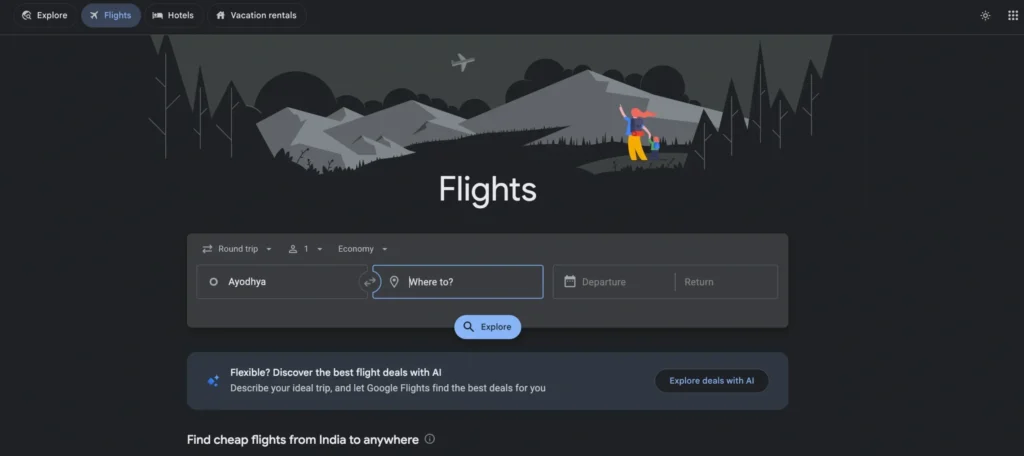
Google Flights is one of the first places I recommend checking before booking an international trip.
Its biggest advantage is speed. Enter your departure city, destination, and approximate travel dates, and you can quickly compare dozens of flight combinations. More importantly, you can change dates without repeatedly starting your search from scratch.
Why Google Flights Works So Well
International airfare can vary significantly from one day to another. A Tuesday departure might cost substantially less than leaving on Friday.
Google Flights makes those differences easy to spot.
The date grid and price graph are particularly useful when you have some flexibility. Instead of testing individual dates manually, you can look across a wider period and identify cheaper combinations.
Another useful feature is airport comparison. Major international destinations often have several airports, and flying into an alternative airport can sometimes reduce the fare.
For example, travelers heading to London can compare Heathrow, Gatwick, Stansted, Luton, and London City depending on available routes.
Best Google Flights Features
- Fast search results
- Flexible-date calendar
- Price graph
- Nearby airport comparison
- Airline and alliance filters
- Stops and duration filters
- Departure and arrival time filters
- Baggage-related filters on supported itineraries
- Fare tracking
You can also track specific flights or routes and receive notifications when prices change.
Pros
- Extremely fast and easy to use
- Excellent for comparing travel dates
- Powerful filtering tools
- Helpful price history and fare insights
- Covers a broad range of airlines
- No need to create an account for basic searching
Cons
- Not every airline or fare is always displayed
- Google usually sends you elsewhere to complete the booking
- The cheapest displayed option is not necessarily the best once baggage and restrictions are considered
Who Should Use Google Flights?
Google Flights is ideal for travelers who want to research international airfare before deciding where to book.
I would use it as a benchmark. Find the best route and approximate price here, then compare that exact itinerary elsewhere before paying.
2. Skyscanner: Best for Flexible International Travelers
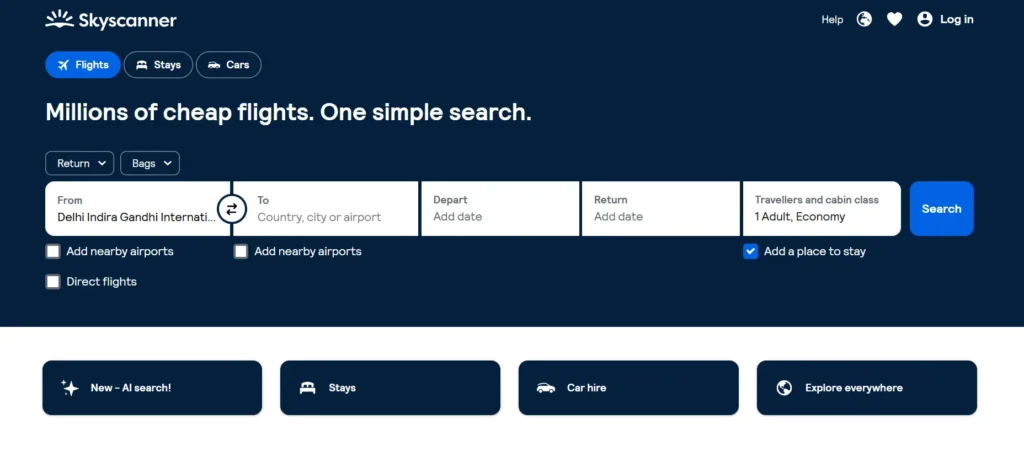
Skyscanner is another excellent option, especially when your destination or dates are flexible.
Its standout feature is the ability to search broadly rather than requiring an exact trip.
For example, you can choose your departure airport and explore destinations based on airfare. This is particularly useful if your goal is simply to take an affordable international vacation rather than visit one specific city.
Search by Cheapest Month
One of Skyscanner’s most useful features is its flexible date functionality.
If you know that you want to visit Europe but do not care whether you travel in September or October, searching across a broader period can reveal much cheaper departure dates.
That can make a substantial difference on long-haul trips.
Search Everywhere
The Everywhere search feature is another reason Skyscanner stands out.
Enter your departure airport and explore destinations based on available fares. It is a practical way to answer a question many travelers have:
“Where can I fly cheaply from my city?”
Instead of choosing the destination first, you can let airfare help determine your trip.
Pros
- Excellent flexible-date tools
- Search Everywhere is useful for spontaneous trips
- Compares many airlines and travel agencies
- Good mobile experience
- Useful price alerts
- Strong coverage of international routes
Cons
- Final bookings may take place on third-party websites
- Quality and support can vary between booking partners
- Displayed prices can occasionally change when you reach the booking page
Who Should Use Skyscanner?
Use Skyscanner if you are flexible about when or where you travel.
It is particularly useful for backpackers, digital nomads, long-term travelers, students, and anyone planning an international trip primarily around price.
3. Kayak: Best for Advanced Flight Comparison

Kayak has been a major flight comparison platform for years, and it remains particularly useful for travelers who like having lots of filters.
Instead of simply showing flights from cheapest to most expensive, Kayak gives you considerable control over how results are displayed.
You can narrow results according to:
- Airline
- Number of stops
- Flight duration
- Departure time
- Arrival time
- Airports
- Cabin class
- Baggage preferences
- Price
These filters become valuable when searching international flights because the cheapest itinerary can sometimes be a terrible itinerary.
Saving $50 may not be worthwhile if it means adding an eight-hour layover.
Price Forecasting
Kayak also provides fare-related insights designed to help travelers decide whether they should book or wait.
No prediction system can guarantee what an airline will do next, but historical fare data can provide useful context.
Explore Feature
If you have a fixed budget but no destination, Kayak’s exploration tools can help you identify destinations that may fit your spending range.
This is especially useful for travelers planning spontaneous international vacations.
Pros
- Powerful search filters
- Good international route coverage
- Flexible-date searching
- Useful price alerts
- Good for comparing complicated itineraries
- Helpful exploration tools
Cons
- Search results can feel busy
- Booking may happen through different third parties
- Lowest price does not always mean the best itinerary
Who Should Use Kayak?
Kayak is best for travelers who want more control over search results.
If you care about specific airlines, departure windows, maximum journey duration, or connection times, Kayak can make narrowing hundreds of options much easier.
4. Momondo: Best for Digging Up Alternative Fares

Momondo is worth checking when you want another opinion after searching Google Flights or Skyscanner.
The platform compares fares from airlines and booking providers, helping travelers uncover alternative booking options that may not appear as prominently elsewhere.
For international travel, that additional comparison can matter.
Even when Momondo does not produce the absolute cheapest price, its results can help you understand the range of fares available for a particular route.
Why Use Momondo?
The main reason is simple: flight search engines do not always return identical results.
Different platforms may have relationships with different booking providers or display fares differently.
Running the same international itinerary through Momondo gives you another reference point before committing several hundred or several thousand dollars to a ticket.
Pros
- Broad fare comparison
- Good international coverage
- Flexible search functionality
- Useful for discovering alternative booking providers
- Easy to compare different itineraries
Cons
- Many bookings are completed through third parties
- Some cheap options may involve less familiar agencies
- Customer service depends on who actually issues your ticket
Who Should Use Momondo?
Momondo works best as a secondary comparison tool.
Find a promising flight elsewhere, search the same dates on Momondo, and see whether another booking option offers meaningful savings.
5. Expedia: Best for International Vacation Packages
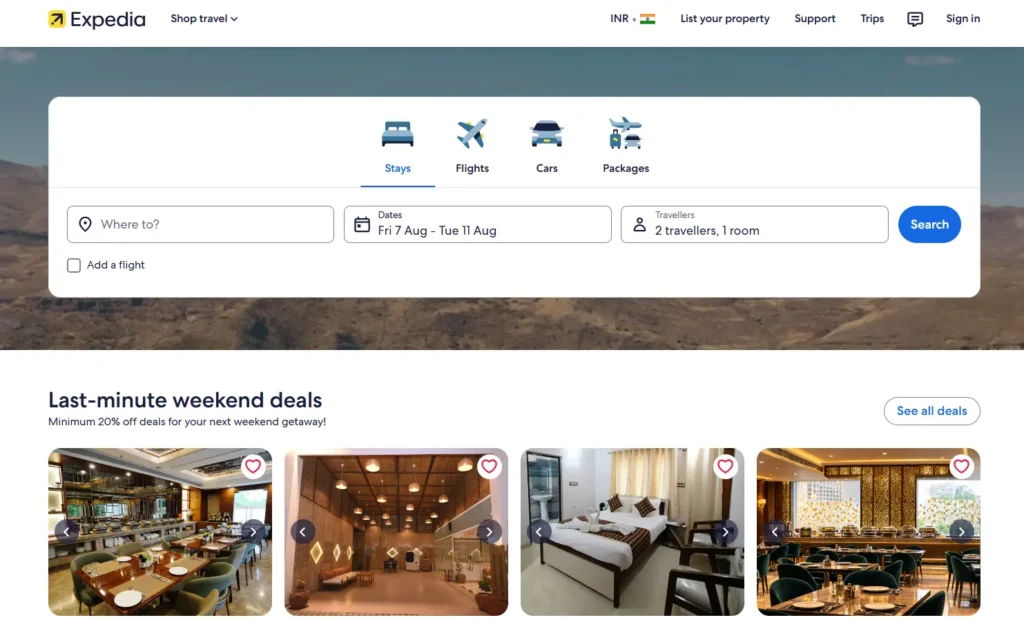
Expedia is different from pure flight metasearch engines because you can use it to book much more than airfare.
Flights, hotels, rental cars, activities, and vacation packages can all be arranged through the platform.
That makes Expedia particularly attractive when you are organizing an entire international vacation.
Flights + Hotels
The biggest reason to consider Expedia is package pricing.
Sometimes booking a flight and hotel together can produce a better overall trip price than purchasing them separately. The important number is the total cost, not simply whether the airfare itself appears cheaper.
For example, imagine:
Option A
Flight: $700
Hotel: $800
Total: $1,500
Option B
Flight + hotel package: $1,350
Even if the standalone flight is identical, the package produces a $150 overall saving.
Always compare both approaches.
Pros
- Book flights and hotels together
- Convenient trip management
- Large accommodation inventory
- Rental cars and activities available
- Useful for package vacations
Cons
- Cheapest standalone airfare may be available elsewhere
- Changes and cancellations can be more complicated when an intermediary is involved
- Package savings vary significantly by destination
Who Should Use Expedia?
Expedia is best for travelers who need both international airfare and accommodation.
Instead of judging it solely on ticket price, compare the total vacation cost.
6. Booking.com: Best for Managing Flights and Accommodation Together
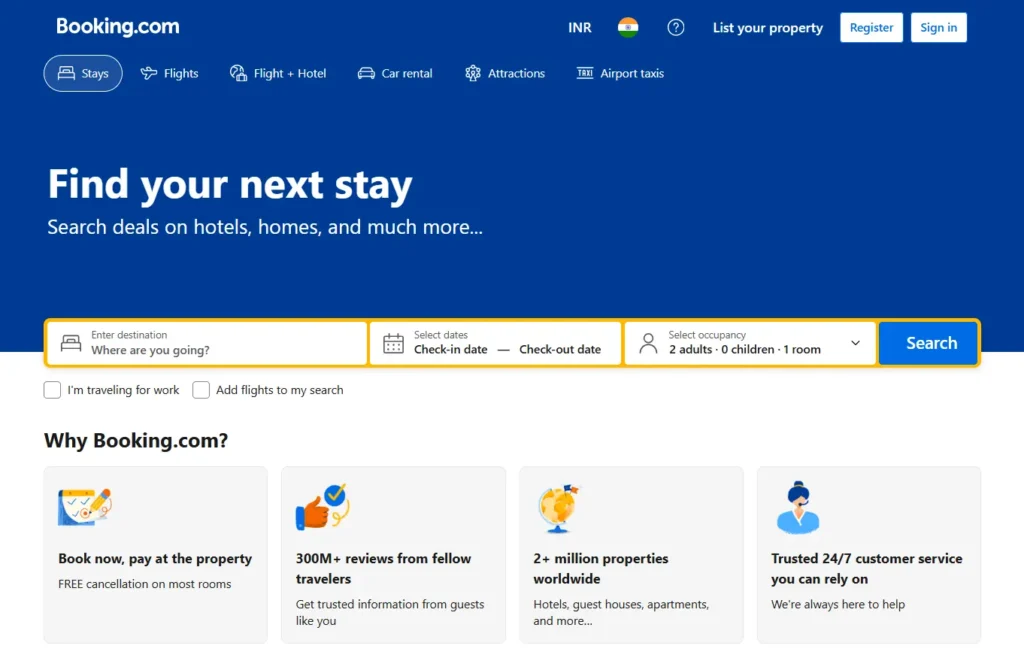
Booking.com is primarily known for hotels, apartments, and other accommodations, but its travel platform also supports flight searches and bookings in many markets.
The main advantage is convenience.
If you already use Booking.com for accommodation, having flights and lodging within the same travel ecosystem can simplify trip planning.
Why Consider Booking.com for Flights?
International trips often involve much more than buying an airline ticket.
You may need:
- Flights
- Hotels
- Airport transfers
- Rental cars
- Attractions
Using fewer platforms can make managing reservations easier, especially during longer multi-city trips.
That said, convenience should not replace comparison. Check the same flight through an airline or metasearch engine before paying.
Pros
- Convenient for existing Booking.com users
- Flights and accommodation in one ecosystem
- Large global hotel inventory
- Useful for international trip planning
- Straightforward interface
Cons
- Not always the cheapest place for airfare
- Flight functionality can vary by market
- Third-party booking conditions require careful reading
Who Should Use Booking.com?
It makes the most sense for travelers who already rely on Booking.com for accommodation and value having multiple travel reservations in one place.
7. Kiwi.com: Best for Complex International Routes
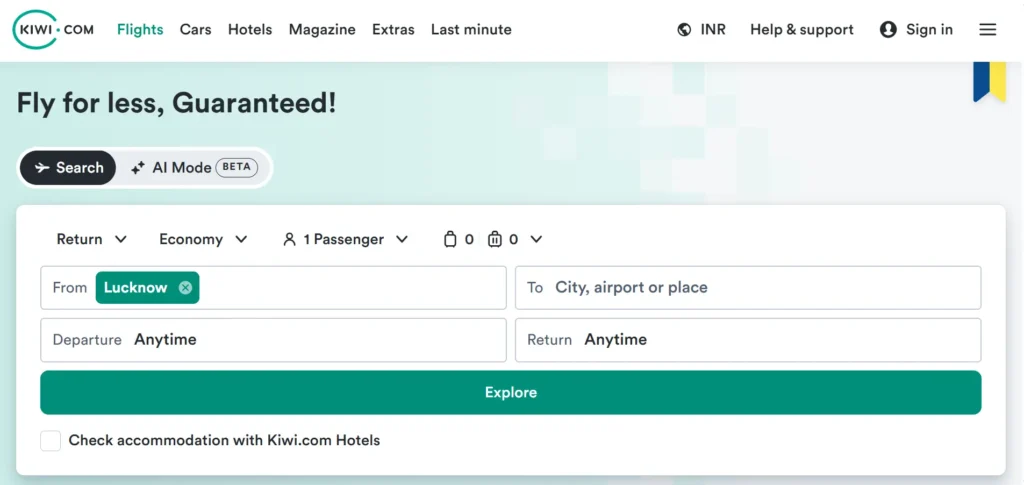
Kiwi.com approaches flight searching differently from many traditional booking sites.
It is known for combining flights from airlines that may not have normal interline or codeshare agreements.
That can produce interesting routes, particularly for destinations that are expensive or difficult to reach using traditional airline partnerships.
Virtual Interlining
Suppose Airline A flies cheaply from your home city to Bangkok, while Airline B offers a cheap Bangkok-to-destination route.
A traditional airline search may not combine those flights into one itinerary.
Kiwi.com’s technology may identify the combination and present it as an option.
That flexibility can create lower prices, but it introduces additional risk.
If you are traveling on separate tickets, one airline may have no responsibility to rebook you if an earlier independent flight is delayed.
You should therefore carefully examine the booking conditions and connection requirements.
Pros
- Excellent for unusual route combinations
- Can combine unrelated airlines
- Useful for multi-city travel
- Strong flexible search tools
- Can uncover creative low-cost itineraries
Cons
- Self-transfer itineraries require additional attention
- Baggage may need to be collected and checked again
- Missed connections can be more complicated
- Visa or transit requirements may apply during self-transfers
Who Should Use Kiwi.com?
Kiwi.com is particularly useful for experienced travelers comfortable with self-transfers and complex itineraries.
If you use a self-transfer route, leave a generous connection window and understand exactly what happens if one flight is delayed.
How to Choose the Best International Flight Booking Site
Instead of automatically choosing whichever website displays the lowest number, compare the complete trip.
Here are the factors that matter most:
| Factor | Why It Matters |
|---|---|
| Final ticket price | Initial search prices may exclude extras |
| Baggage allowance | Checked luggage can substantially increase cost |
| Connection time | Cheap flights may involve very long layovers |
| Self-transfer | Separate tickets increase connection risk |
| Cancellation policy | International plans can change |
| Customer support | Important when disruptions occur |
| Airline reputation | Service quality varies |
| Airport location | Secondary airports can add transport costs |
For example, a $520 itinerary is not automatically better than a $560 itinerary.
If the cheaper ticket requires a $50 checked bag, a six-hour longer journey, and a self-transfer, the $560 option may provide much better value.
Pro-Tips for Finding Cheaper International Flights
Finding cheap international airfare is less about discovering one secret website and more about searching intelligently.
1. Start with flexible dates
Even moving your departure by one or two days can sometimes produce a significant difference in airfare.
Use a date calendar before deciding on exact travel dates.
2. Compare nearby airports
Large cities often have several airports.
Check both your departure region and destination for alternatives. Just remember to calculate transportation costs to and from secondary airports.
3. Track prices before booking
If your trip is several months away, create price alerts instead of manually searching every day.
Google Flights, Skyscanner, Kayak, and other platforms provide tracking tools.
4. Compare the airline’s website
Once you find a good fare through a search engine, check the airline’s own website.
If the price is similar, booking directly can make changes, cancellations, seat selection, and customer support simpler.
5. Compare baggage before paying
Budget airlines can look extremely cheap until extras are added.
Calculate the real ticket cost:
Airfare + baggage + seats + payment fees + airport transportation
That is the number you should compare.
6. Be careful with very short self-transfers
A cheap international itinerary is useless if the connection is unrealistic.
For separate tickets, give yourself considerably more time than you would for a protected airline connection.
7. Check visa requirements for connections
Some self-transfer itineraries may require you to pass immigration, collect baggage, change terminals, or even change airports.
Always check transit and entry requirements before booking.
8. Search first, book second
Do not purchase the first cheap fare you see.
A simple workflow works well:
Google Flights → Skyscanner/Kayak → Airline website → Final booking
That takes a few extra minutes and gives you much better context about whether you are actually getting a competitive fare.
FAQs About International Flight Booking Sites
1. What is the best website for booking international flights?
Google Flights is one of the best starting points because of its fast search, flexible-date calendar, filtering options, and price tracking. However, it is primarily a search tool. Compare its results with Skyscanner, Kayak, and the airline’s own website before booking.
2. Which website usually has the cheapest international flights?
There is no website that consistently has the cheapest airfare on every route. Prices vary according to airline inventory, travel dates, booking providers, and route. Comparing multiple platforms is the safest strategy.
3. Is Skyscanner good for international flights?
Yes. Skyscanner is particularly good for international travelers with flexible dates or destinations. Its Everywhere search is useful for discovering affordable destinations from your departure airport.
4. Is it better to book international flights directly with airlines?
If the airline offers the same or a very similar price, booking directly is often preferable. It can simplify communication if you need to change your flight, request a refund, select seats, or handle a disruption.
However, third-party agencies can sometimes provide meaningful savings.
5. How far in advance should I book international flights?
There is no universal booking window that guarantees the lowest fare. Prices depend heavily on route, season, holidays, demand, and airline capacity.
Start monitoring fares several months before departure, especially for peak travel periods, and set price alerts.
6. Are third-party flight booking sites safe?
Many established online travel agencies are legitimate, but booking through an intermediary adds another company between you and the airline.
Before paying, check cancellation rules, change fees, baggage conditions, and who is responsible for customer support.
7. Can flight prices change after searching?
Yes. Airline inventory changes constantly. A fare can disappear when a cheaper booking class sells out or when availability changes.
A price changing does not necessarily mean the website increased it because you searched multiple times.
8. What is the best flight site for flexible travel dates?
Google Flights and Skyscanner are both excellent choices. Google Flights has strong calendar and price graph tools, while Skyscanner is particularly useful when both your dates and destination are flexible.
Final Verdict: Which International Flight Booking Site Should You Use?
The best international flight booking site depends on how you travel.
For general airfare research, Google Flights is an excellent starting point because it makes dates, routes, airlines, and prices easy to compare.
Skyscanner is particularly strong for flexible travelers, while Kayak provides detailed filters for narrowing complex results. Momondo is worth checking as an additional fare comparison source.
If you are booking an entire vacation, Expedia and Booking.com can be useful because they combine flights with accommodation and other travel services.
Finally, Kiwi.com is worth exploring for unusual multi-airline itineraries, although travelers should understand the additional risks associated with self-transfers and separate tickets.
The key lesson is simple: do not depend on one website.
Search your itinerary on at least two flight comparison platforms, check the airline’s direct price, compare baggage and cancellation conditions, and look at the total journey rather than the advertised fare alone.
A few extra minutes of comparison can save money, reduce unnecessary layovers, and help you book an international flight that actually fits your trip.