
Planning a trip should be exciting, but choosing where to book can quickly become confusing. You search for the same hotel on Booking.com and Expedia, only to find different prices, cancellation policies, payment options, and member discounts. One platform lets you pay at the property, while the other offers a package discount that seems too good to ignore. Which one actually gives better value?
This is exactly why travelers compare Booking.com vs Expedia before making a reservation. Both are among the world’s largest online travel agencies (OTAs), offering hotels, flights, vacation rentals, car rentals, airport transfers, and travel experiences. At first glance they appear similar, but they operate differently and often appeal to different types of travelers.
The biggest difference isn’t simply price. It comes down to booking flexibility, regional coverage, loyalty rewards, payment methods, bundled vacation deals, and the type of trip you’re planning. A solo traveler booking a weekend hotel stay may benefit from one platform, while a family arranging flights, hotels, and rental cars together may save more with the other.
This guide takes an unbiased look at both platforms. Instead of comparing features side by side from the beginning, we’ll first explore what makes each brand unique, how each booking system works, and who is most likely to benefit from using it. Then we’ll compare them across the factors that matter most, including inventory, pricing transparency, loyalty programs, cancellation policies, customer support, and overall booking experience.
By the end, you’ll have a much clearer idea of which platform is the better fit for your travel style rather than relying on a simple “winner.”
Booking.com Overview: What Is Booking.com?
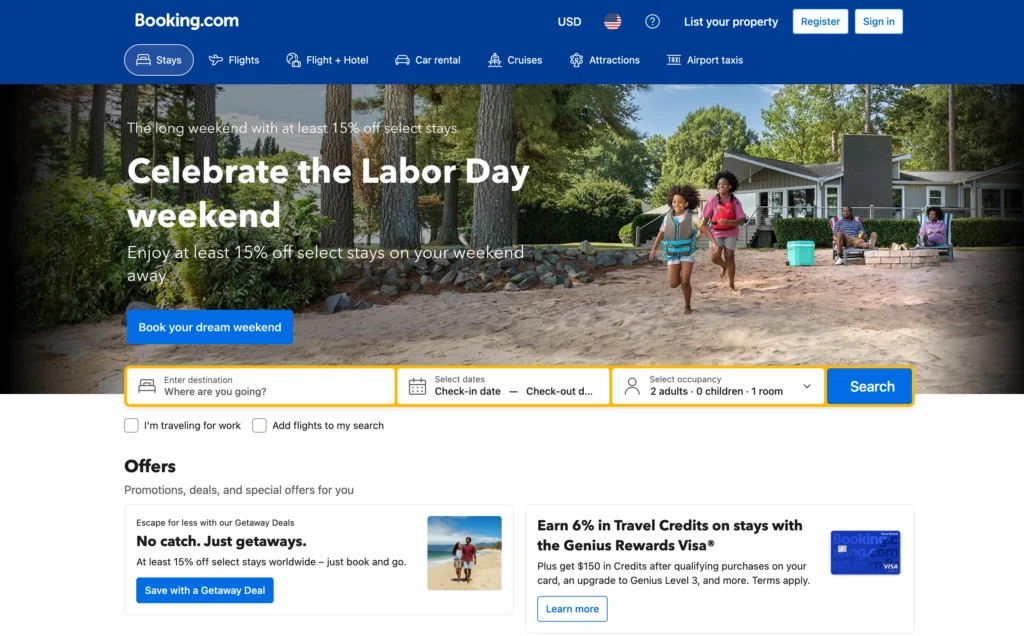
Booking.com is one of the world’s largest online accommodation marketplaces and has become a popular choice for travelers looking for everything from budget hostels to luxury resorts. Founded in the Netherlands, it has expanded into nearly every major travel market and now offers hotels, apartments, vacation homes, villas, flights, rental cars, airport taxis, and travel attractions.
Unlike many traditional travel agencies, Booking.com primarily operates as a marketplace connecting travelers directly with accommodation providers. Depending on the property, payments may be handled by Booking.com or collected directly by the hotel. This flexibility allows many accommodations to offer multiple payment options, including paying at the property.
Booking.com’s biggest strength is its enormous accommodation inventory. Travelers searching for apartments, boutique hotels, guesthouses, and unique local stays often find more choices than on many competing platforms. It is especially strong throughout Europe and continues to have broad coverage across Asia-Pacific, North America, and many emerging travel destinations.
The platform is designed for almost every type of traveler, but it is particularly attractive for independent travelers, digital nomads, couples, and families who want flexible booking conditions and a wide range of accommodation choices without being limited to traditional hotel chains.
Key Features of Booking.com
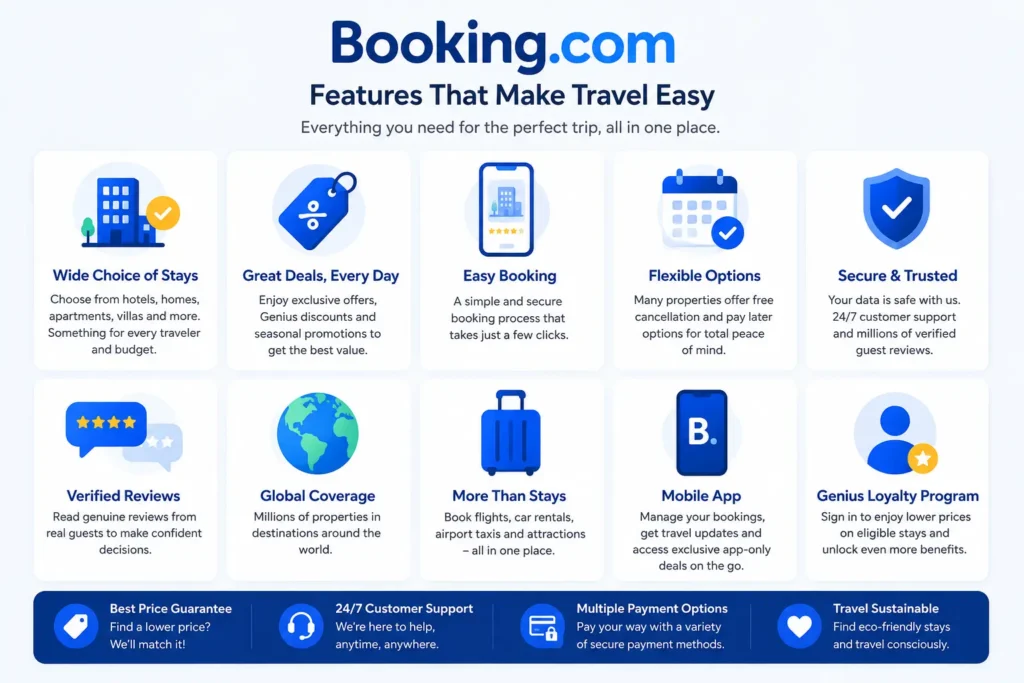
1. Massive Accommodation Selection
Booking.com is best known for its extensive collection of places to stay. Instead of focusing only on hotels, it also includes apartments, villas, cabins, vacation homes, hostels, resorts, boutique properties, bed-and-breakfasts, and unique accommodations.
This matters because travelers often have different priorities. A family may prefer a full apartment with a kitchen, while a solo backpacker may simply need an affordable hostel close to public transportation.
The large inventory also increases the chances of finding availability during busy travel seasons when many properties elsewhere are already sold out.
2. Flexible Booking Options
Many listings on Booking.com allow free cancellation until a specified date. Others let travelers reserve a room without paying immediately.
These options provide peace of mind when travel plans remain uncertain. For example, someone waiting for visa approval or flight confirmation can often reserve accommodation first without making an immediate payment.
Not every property offers these benefits, so travelers should always read the room conditions before completing their reservation.
3. Flights, Cars, and Airport Transfers
Although Booking.com built its reputation around accommodations, it has gradually expanded into other travel services.
Users can search for flights, reserve rental cars, arrange airport taxis, and book local attractions within the same account. While many travelers still use specialized flight search engines, having these services together makes trip planning more convenient.
4. Genius Loyalty Program
Booking.com’s free Genius loyalty program rewards repeat users with increasing benefits.
As members complete eligible stays, they unlock higher Genius levels that may include exclusive discounts, complimentary breakfast at selected properties, room upgrades where available, and other travel perks offered by participating accommodations.
The program is simple because there is no membership fee. Travelers automatically receive benefits after meeting the stay requirements.
5. User Reviews from Verified Guests
One of Booking.com’s strongest features is its review system.
Only guests who actually completed their stays can submit reviews, helping reduce fake or promotional feedback. Reviews also include category ratings for cleanliness, comfort, location, facilities, staff, value for money, and Wi-Fi.
This detailed feedback often provides a clearer picture than relying only on an overall star rating.
6. Powerful Search Filters
Booking.com includes an impressive range of filters that help narrow thousands of listings into manageable choices.
Travelers can filter by neighborhood, property type, meal plans, review score, accessibility features, parking availability, pet-friendly policies, swimming pools, business facilities, sustainability certifications, and much more.
These filters become particularly useful when booking accommodation in large cities where hundreds of options may appear for a single search.
Expedia Overview: What Is Expedia?
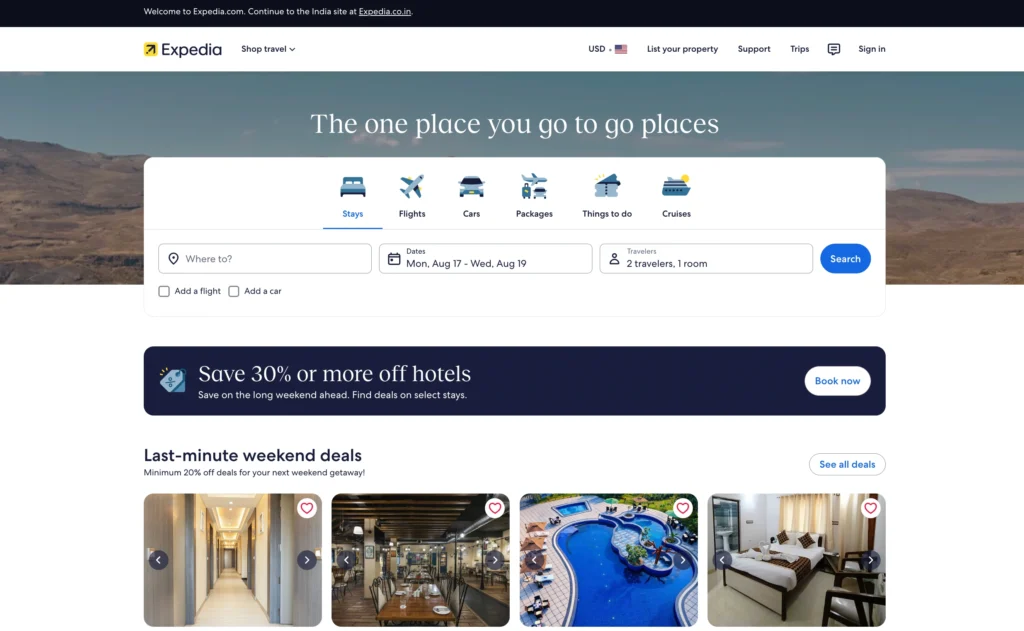
Expedia is one of the oldest and most recognizable names in online travel. Rather than focusing primarily on accommodation, Expedia has long positioned itself as a complete travel booking platform where travelers can organize nearly every aspect of a trip in one place.
Today, Expedia allows users to reserve hotels, flights, vacation packages, rental cars, cruises, activities, and airport transportation through a single account. This broad ecosystem makes it especially attractive for travelers planning complete vacations instead of booking individual travel components separately.
One of Expedia’s defining characteristics is its strong emphasis on bundled travel packages. Combining flights with hotels or rental cars often produces lower overall prices than booking each item individually, particularly for leisure travelers planning longer vacations.
Expedia has particularly strong relationships with airlines, hotel chains, and package providers across North America while maintaining broad international coverage throughout Europe, Asia-Pacific, and many other destinations.
The platform generally appeals to families, vacation planners, business travelers, and anyone who prefers managing multiple reservations from a single itinerary. Travelers looking for package savings and integrated trip management often find Expedia especially convenient.
Key Features of Expedia

1. Complete Vacation Packages
Expedia’s package booking system is one of its biggest strengths.
Instead of reserving flights, hotels, and rental cars separately, travelers can combine them into a single booking. In many cases, bundled pricing produces noticeable savings compared with purchasing every component individually.
This can simplify planning while reducing overall travel costs.
2. Extensive Flight Options
Expedia has long been recognized for its flight booking capabilities.
Users can compare airlines, departure times, fare classes, baggage policies, and stopovers while also combining flights with hotels or rental cars.
Business travelers and families often appreciate having these reservations stored together under one itinerary.
3. One Key Rewards Program
Expedia participates in the One Key loyalty ecosystem, allowing eligible bookings across participating brands within the Expedia Group to contribute toward member rewards.
Instead of rewarding only hotel stays, the program can provide value across different travel products, making it appealing for travelers who regularly book complete vacations.
Members also gain access to exclusive pricing on selected hotels and travel offers.
4. Flexible Payment Choices
Depending on the property and destination, Expedia may offer both pay-now and pay-later booking options.
This flexibility gives travelers more control over budgeting while allowing them to secure reservations before making the full payment.
Availability varies between hotels and destinations, making it important to review payment conditions during checkout.
5. Mobile App Benefits
Expedia’s mobile application includes member pricing, itinerary management, booking updates, and travel notifications.
Many users appreciate being able to manage hotels, flights, rental cars, and activities from a single interface while traveling.
The app also occasionally features mobile-exclusive discounts on selected bookings.
6. Activities and Local Experiences
Beyond hotels and flights, Expedia offers a wide variety of bookable travel experiences.
Travelers can reserve sightseeing tours, attraction tickets, excursions, airport transfers, cruises, and other activities before arriving at their destination.
Booking these services together can reduce the need to coordinate multiple travel providers later.
Booking.com vs Expedia: Key Differences at a Glance
| Comparison Area | Booking.com | Expedia |
|---|---|---|
| Best For | Accommodation bookings | Vacation packages |
| Hotels | Extensive independent property selection | Strong chain hotel coverage |
| Flights | Available but secondary focus | Major strength |
| Vacation Rentals | Large inventory | Good selection |
| Loyalty Program | Genius | One Key |
| Member Discounts | Genius member pricing | One Key member pricing |
| Payment Options | Pay now, pay later, property payment on many stays | Pay now and pay later on eligible bookings |
| Cancellation Flexibility | Strong selection of refundable rooms | Depends on supplier and fare |
| Mobile App | Excellent accommodation search | Excellent trip management |
| Package Deals | Available in some markets | One of Expedia’s biggest strengths |
| Regional Strength | Europe and global accommodations | North America and bundled travel |
| Customer Support | Multiple support channels | Strong support for packaged itineraries |
While both platforms cover similar travel services, three differences influence most booking decisions.
First, Booking.com generally places greater emphasis on accommodation variety and flexible hotel reservations. Travelers looking for apartments, boutique properties, or free cancellation options often start here.
Second, Expedia focuses heavily on combining travel products. If you’re booking flights, hotels, rental cars, and activities together, package pricing may offer better overall value.
Finally, loyalty benefits work differently. Booking.com’s Genius program primarily rewards accommodation bookings, while Expedia’s One Key ecosystem is designed to reward travelers across multiple eligible travel services.
Pricing and Transparency: Which Is Actually Cheaper?
Price is often the deciding factor when comparing Booking.com vs Expedia, but the cheapest option is not always the one with the lowest advertised rate. A room that appears less expensive in search results can end up costing more after taxes, service fees, or currency conversion charges are added. The smartest approach is to compare the final checkout price rather than the headline nightly rate.
How Booking.com Pricing Works
Booking.com mainly operates as a marketplace connecting travelers with hotels and property owners. Depending on the property, you may either pay Booking.com during checkout or pay the accommodation directly when you arrive.
Many listings allow travelers to choose between prepaid and pay-at-property options. Hotels also decide whether to offer refundable or non-refundable rates, so pricing and flexibility vary from one property to another.
Booking.com frequently highlights:
- Genius member discounts
- Mobile-only offers
- Free cancellation rates
- Breakfast-inclusive packages
- Pay later options at eligible properties
A hotel with a slightly higher nightly rate may actually provide better overall value if breakfast, free cancellation, or flexible payment is included.
How Expedia Pricing Works
Expedia uses a combination of merchant and agency booking models depending on the supplier and destination.
Travelers may either pay Expedia during checkout or pay the hotel directly upon arrival. Like Booking.com, the available payment method depends on the property’s agreement with Expedia.
Expedia becomes particularly competitive when travelers bundle multiple services together, such as:
- Flight + Hotel
- Hotel + Car Rental
- Flight + Hotel + Car
Package pricing can often reduce the overall trip cost compared with booking each component separately.
Expedia also offers:
- Member-only hotel prices
- Mobile-exclusive deals
- Promotional package discounts
- Seasonal travel offers
Taxes, Fees, and Price Transparency
A common misunderstanding is that OTAs hide fees. In reality, many additional costs are mandatory government taxes or property-imposed charges rather than platform fees.
Examples include:
- Local occupancy taxes
- Tourism taxes
- Resort fees
- City taxes
- VAT or sales tax
Some destinations require these charges to be paid directly at the property, while others include them during online checkout.
Optional extras such as airport transfers, breakfast, parking, or travel insurance may also increase the final cost if selected.
Both Booking.com and Expedia generally display pricing clearly, but the timing of tax and fee disclosure can vary depending on the country, supplier, and local regulations.
Which Platform Is Usually Cheaper?
Neither platform consistently offers the lowest price.
Booking.com may provide better value through:
- Genius discounts
- Free cancellation
- Breakfast-inclusive offers
- Pay-at-property flexibility
Expedia may offer greater savings through:
- Vacation packages
- Member pricing
- Combined hotel and flight discounts
- Promotional travel bundles
For travelers, the most important comparison is the total trip cost, including taxes, flexibility, included amenities, and cancellation terms.
Loyalty Programs: Booking.com vs Expedia
Loyalty programs can make a noticeable difference for frequent travelers, but they reward customers in different ways.
Booking.com Genius Loyalty Program
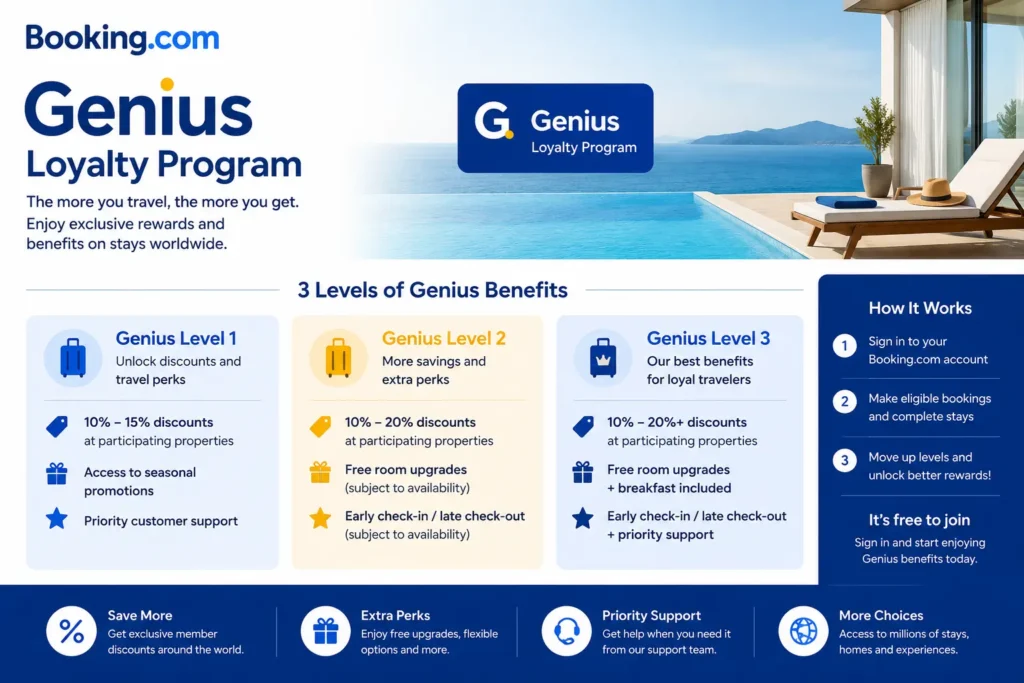
Booking.com’s loyalty program is called Genius, and joining is completely free.
Members unlock additional benefits as they complete eligible stays. Higher membership levels typically provide access to larger discounts and extra perks at participating properties.
Common benefits include:
- Member-only discounts
- Complimentary breakfast at selected hotels
- Free room upgrades where available
- Priority pricing at eligible accommodations
For example, someone who books several hotel stays throughout the year may qualify for higher Genius levels and receive better discounts without paying an annual membership fee.
One limitation is that benefits depend on participating properties rather than every hotel listed on the platform.
Genius works best for travelers who primarily book accommodation.
Expedia One Key Rewards
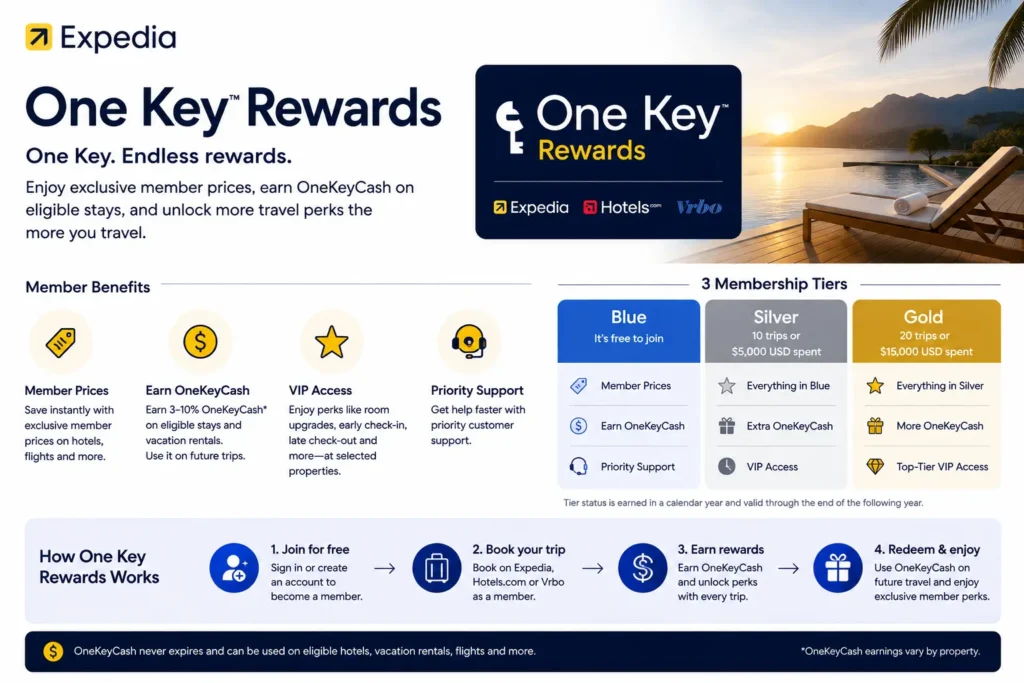
Expedia participates in the One Key rewards ecosystem, which covers eligible bookings across Expedia Group brands.
Instead of focusing mainly on hotels, One Key allows travelers to earn rewards from different travel services, including hotels, vacation rentals, flights, and other eligible bookings.
Members can receive:
- Member pricing
- Reward accumulation on eligible bookings
- Savings on future travel
- Exclusive promotional offers
This broader ecosystem makes One Key attractive for travelers who regularly purchase complete vacations rather than booking only hotels.
Like most loyalty programs, eligibility rules, participating suppliers, and redemption options vary.
Which Loyalty Program Offers Better Value?
The answer depends on how you travel.
Occasional travelers
Booking.com’s Genius program is easy to join and provides immediate access to member pricing.
Frequent hotel guests
Genius often delivers better accommodation-focused benefits if most bookings are hotels.
Frequent flight bookers
Expedia’s broader rewards ecosystem may provide greater long-term value when flights are booked regularly.
Families
Families planning vacation packages can benefit from Expedia’s combined travel rewards.
Independent travelers
Booking.com’s accommodation discounts often appeal to travelers booking hotels, apartments, or guesthouses individually.
Neither program is automatically superior. The better choice depends on the types of bookings you make throughout the year.
User Interface and Booking Experience
Both Booking.com and Expedia have invested heavily in improving their websites and mobile apps.
Booking.com Website and App
Booking.com’s search interface is designed around accommodation.
Users can quickly filter results using dozens of criteria, including:
- Budget
- Guest ratings
- Property type
- Meal plans
- Neighborhood
- Distance from attractions
- Parking
- Pet-friendly policies
- Accessibility features
Interactive maps help travelers compare locations before booking.
Property pages include detailed descriptions, verified guest reviews, room photos, amenities, cancellation terms, and payment information.
The mobile app also offers mobile-exclusive discounts and allows users to manage bookings while traveling.
Expedia Website and App
Expedia provides a broader trip-planning experience.
Instead of focusing primarily on accommodation, the platform integrates hotels, flights, rental cars, activities, and packages into one interface.
Its itinerary management tools are particularly useful for travelers coordinating several reservations during one vacation.
The mobile app keeps flight details, hotel bookings, activity reservations, and rental car information together, reducing the need to switch between multiple travel apps.
Which Is Easier to Use?
For accommodation searches, Booking.com generally feels more refined because of its extensive property filters and detailed hotel pages.
For complete vacation planning, Expedia’s integrated booking flow makes organizing multiple travel services much easier.
Cancellation and Refund Policies
One of the biggest misconceptions about online travel agencies is that they decide every cancellation policy.
In reality, refund rules often depend on:
- Hotel policies
- Airline fare rules
- Room type
- Ticket conditions
- Supplier agreements
The OTA simply displays and manages those conditions.
Scenario 1: Refundable Hotel Reservation
A traveler books a hotel with free cancellation and cancels one week before arrival.
If the booking meets the cancellation deadline, the refund is usually processed according to the property’s policy.
Scenario 2: Non-Refundable Booking
Another traveler chooses the cheapest available room, which is marked as non-refundable.
Later, travel plans change.
In this case, the hotel may not provide a refund because the traveler selected a discounted non-refundable rate.
The limitation comes from the booking conditions rather than the OTA itself.
Scenario 3: Airline Cancels the Flight
A traveler books a flight through an OTA.
The airline later cancels the flight.
Depending on the airline’s policy, travelers may receive a refund, travel credit, or alternative flight. The OTA often assists with processing the change, but final eligibility is usually determined by the airline.
The key lesson is simple:
Always read the cancellation conditions before completing payment, regardless of which platform you use.
Customer Support: Booking.com vs Expedia
Customer support becomes most important when something goes wrong.
Both platforms provide several support options, including:
- Phone support
- Online help centers
- Mobile app assistance
- Self-service booking management
- Refund request tools
Booking.com generally performs well for straightforward accommodation issues.
Expedia often provides stronger support for travelers managing multiple bookings within one itinerary.
However, one challenge applies to every OTA.
When you book through a third-party platform, there are often three parties involved:
- The traveler
- The OTA
- The hotel or airline
If a flight is delayed or a hotel dispute occurs, responsibility may move between suppliers before the issue is resolved.
For complicated international itineraries, travelers should keep confirmation emails, booking references, and supplier contact information readily available.
Booking.com Pros and Cons
Pros
- Huge accommodation selection worldwide.
- Excellent apartment and vacation rental inventory.
- Powerful search filters.
- Free Genius loyalty program.
- Flexible payment options at many properties.
- Verified guest reviews improve booking confidence.
- Strong coverage throughout Europe and Asia.
Cons
- Flight booking features are less comprehensive than specialized flight platforms.
- Loyalty benefits depend on participating properties.
- Prices vary significantly between hotels.
- Customer support response times may increase during peak travel periods.
- Property policies differ widely.
Expedia Pros and Cons
Pros
- Excellent vacation package pricing.
- Strong flight booking capabilities.
- Convenient itinerary management.
- One Key rewards across eligible travel products.
- Good selection of major hotel brands.
- Mobile app simplifies complete trip planning.
- Frequent promotional package discounts.
Cons
- Package savings may not apply to every destination.
- Hotel cancellation rules vary by supplier.
- Independent accommodation choices may be fewer in some regions.
- Some promotions are limited to members.
- Final pricing depends on supplier agreements.
Detailed Booking.com vs Expedia Comparison
| Feature | Booking.com | Expedia |
|---|---|---|
| Hotel Inventory | Excellent | Excellent |
| Flight Booking | Good | Excellent |
| Vacation Rentals | Extensive | Strong |
| Pricing Transparency | Very Good | Very Good |
| Loyalty Program | Genius | One Key |
| Member Discounts | Yes | Yes |
| Package Deals | Available | Excellent |
| Cancellation Options | Property dependent | Supplier dependent |
| Payment Methods | Flexible | Flexible |
| Pay Later | Available on eligible stays | Available on eligible bookings |
| Mobile App | Excellent | Excellent |
| Search Filters | Extensive | Comprehensive |
| Customer Support | Strong | Strong |
| Regional Strength | Europe, Asia-Pacific | North America, Global |
| Best For | Hotels and apartments | Complete vacations |
Booking.com vs Expedia: Which Should You Choose?
Choose Booking.com If…
- You mainly book hotels or apartments.
- Flexible cancellation is important.
- You enjoy comparing many accommodation types.
- You frequently travel throughout Europe.
- Verified guest reviews influence your decisions.
- You prefer paying at the property when possible.
Choose Expedia If…
- You book flights and hotels together.
- You frequently purchase vacation packages.
- You want one itinerary for your entire trip.
- You regularly rent cars while traveling.
- You value cross-product travel rewards.
- You often plan family vacations.
Final Verdict
There is no universal winner in the Booking.com vs Expedia comparison because both platforms excel in different situations.
Solo travelers often appreciate Booking.com’s wide accommodation selection, verified reviews, and flexible booking options.
Families may benefit from Expedia’s vacation packages that combine flights, hotels, and rental cars into a single reservation.
Business travelers should compare cancellation flexibility, payment methods, receipt management, and itinerary organization before choosing a platform.
Budget travelers should always compare the final checkout price rather than the advertised nightly rate. Taxes, included meals, cancellation flexibility, and member discounts can significantly affect the total cost.
Luxury travelers can find premium hotels on both platforms, but availability, included benefits, and promotional offers vary by destination and hotel partner.
Frequent travelers should consider which loyalty ecosystem aligns with their booking habits. Booking.com’s Genius program is particularly rewarding for regular hotel stays, while Expedia’s One Key program offers broader value across eligible travel services.