
Use the TravelTweaks hotel guide to find better stays for less. Compare hotel prices, avoid hidden fees, choose locations, earn perks, and book smarter.
I’ve made the mistake of booking a hotel because it looked like a bargain, only to realize later that it was 45 minutes from everything I wanted to see. The room was cheap. The trip wasn’t.
That’s why choosing a hotel deserves more thought than simply sorting search results from lowest to highest price.
A good hotel can save you time, transportation costs, and unnecessary stress. A badly located hotel can do exactly the opposite, even when the nightly rate looks attractive.
The TravelTweaks Hotels approach is useful because smarter accommodation planning isn’t about finding the cheapest room. It’s about finding the best combination of price, location, comfort, flexibility, and useful benefits.
In this guide, I’ll walk through the hotel-booking strategies that actually matter, from comparing rates and loyalty programs to spotting hidden fees and improving your chances of an upgrade.
Why Your Hotel Choice Matters More Than You Think?
Flights usually get most of the attention when people plan a vacation.
But once you arrive, your hotel affects you every single day.
Location determines how early you need to wake up. Bed quality affects how rested you feel. Breakfast can change your morning budget. Poor soundproofing can ruin your sleep. A distant location can add hours of transportation over the course of a trip.
That’s why I don’t judge hotels purely by nightly rate.
Imagine you’re comparing these two options:
| Cost Factor | Hotel A | Hotel B |
|---|---|---|
| Nightly rate | $120 | $150 |
| 4-night stay | $480 | $600 |
| Resort/destination fees | $100 | $0 |
| Daily transportation | $120 | $20 |
| Breakfast | $80 | Included |
| Real trip cost | $780 | $620 |
Hotel A initially looks $30 cheaper per night.
After accounting for the rest of the stay, it’s actually $160 more expensive.
And that’s before putting a value on the extra time spent commuting.
The better question isn’t:
“What’s the cheapest hotel?”
It’s:
“Which hotel gives me the best overall stay for my budget?”
What TravelTweaks Hotels Section Covers?
A useful hotel guide should do more than show attractive pictures of infinity pools.
Travelers need practical information that helps them decide whether a property actually fits their trip.
The TravelTweaks hotel content can be approached as research covering areas such as:
- Hotels and resorts
- Accommodation comparisons
- Locations and neighborhoods
- Amenities
- Pricing considerations
- Booking strategies
- Travel deals
- Destination-specific stays
- Resort experiences
- Money-saving ideas
- Practical travel advice
Different travelers also need different things from a hotel.
A family might prioritize connecting rooms, breakfast, a pool, and laundry.
A business traveler may care about Wi-Fi, a desk, transportation, and late check-in.
A couple might prioritize location, atmosphere, restaurants, and views.
A solo traveler may put security and walkability first.
That’s why a hotel can’t really be called “the best” without answering one more question:
Best for whom?
Booking Strategies That Actually Work
Hotel prices aren’t completely predictable.
Rates can change with occupancy, events, seasonality, demand, and how close you are to the arrival date.
There isn’t one secret trick that guarantees the lowest price every time.
But there are several strategies that consistently make hotel research better.
Compare Before You Commit
Never assume the first price you see is the best price.
Check multiple booking channels and compare them against the hotel’s own website.
But make sure you’re comparing the same room under the same conditions.
A $180 room with free cancellation isn’t directly comparable to a $165 non-refundable room.
Likewise, check whether breakfast, taxes, resort fees, parking, and other benefits are included.
I compare:
Total stay price + cancellation policy + room type + included benefits.
That’s much more useful than comparing headline nightly rates.
Sometimes booking directly wins.
Sometimes an online travel agency has a better deal.
Sometimes your loyalty membership changes the answer completely.
Use Incognito Mode When Searching
You’ll often hear advice telling travelers to use incognito or private browsing because hotels supposedly raise prices every time they see you searching.
I’d be careful with that claim.
Hotel pricing changes constantly for many reasons, including demand, inventory, promotions, location, device settings, currency, and availability. There isn’t strong evidence that simply searching repeatedly guarantees that a hotel will deliberately raise the price specifically for you.
That said, private browsing can still be useful for clean comparisons.
It may prevent logged-in memberships, previous searches, cookies, or personalized settings from affecting what you see.
My approach is simple:
Search normally.
Then compare the same stay in a private window and while logged into any loyalty account you have.
If the prices differ, investigate why.
Don’t expect incognito mode to magically cut a $300 room to $180.
Time Your Booking Strategically

There’s no universal best day to book every hotel.
A beachfront resort during Christmas behaves differently from a business hotel on a quiet weekend.
For high-demand trips, I book earlier.
That includes:
- Christmas
- New Year’s Eve
- Major festivals
- School holidays
- Big concerts
- Sporting events
- Peak summer destinations
- Popular wedding weekends
If I’m uncertain about prices, I prefer booking a refundable rate.
Then I continue checking.
If the same hotel becomes cheaper, I can potentially cancel and rebook, assuming the terms allow it.
This strategy gives you protection against the hotel selling out while leaving room to benefit if rates fall.
Just keep careful track of cancellation deadlines.
Call the Hotel Directly
This old-school strategy still has value.
If you’ve found a good online rate, contact the hotel and ask whether they can match it or offer a better direct-booking package.
They may not reduce the room rate.
But they might offer something else:
- Breakfast
- Parking
- Better cancellation terms
- Room upgrade
- Late checkout
- Welcome amenity
- Resort credit
This can be especially effective with independent hotels and smaller properties.
Be polite and specific.
Rather than saying, “Give me a discount,” explain the rate you’ve found and ask whether there’s an advantage to booking directly.
Understanding Hotel Loyalty Programs

If you travel more than a couple of times per year, hotel loyalty programs deserve attention.
Major hotel groups such as Marriott Bonvoy, Hilton Honors, World of Hyatt, and IHG One Rewards allow members to earn points and potentially access member rates and other benefits.
You don’t need elite status to start getting value.
Basic membership is typically free.
Depending on the program and property, members may gain access to:
- Member-only rates
- Points
- Free Wi-Fi
- Digital check-in
- Promotional bonuses
- Award nights
Higher status levels can add benefits such as room upgrades, breakfast, lounge access, bonus points, and late checkout, depending on the program.
The catch?
Booking through certain third-party platforms may mean you don’t earn hotel points or receive elite benefits.
If loyalty perks matter to you, check the program’s rules before choosing where to book.
Also remember that points aren’t free money.
If a hotel costs $150 or 30,000 points, calculate whether those points could deliver more value somewhere else before redeeming them.
Hidden Fees to Watch For
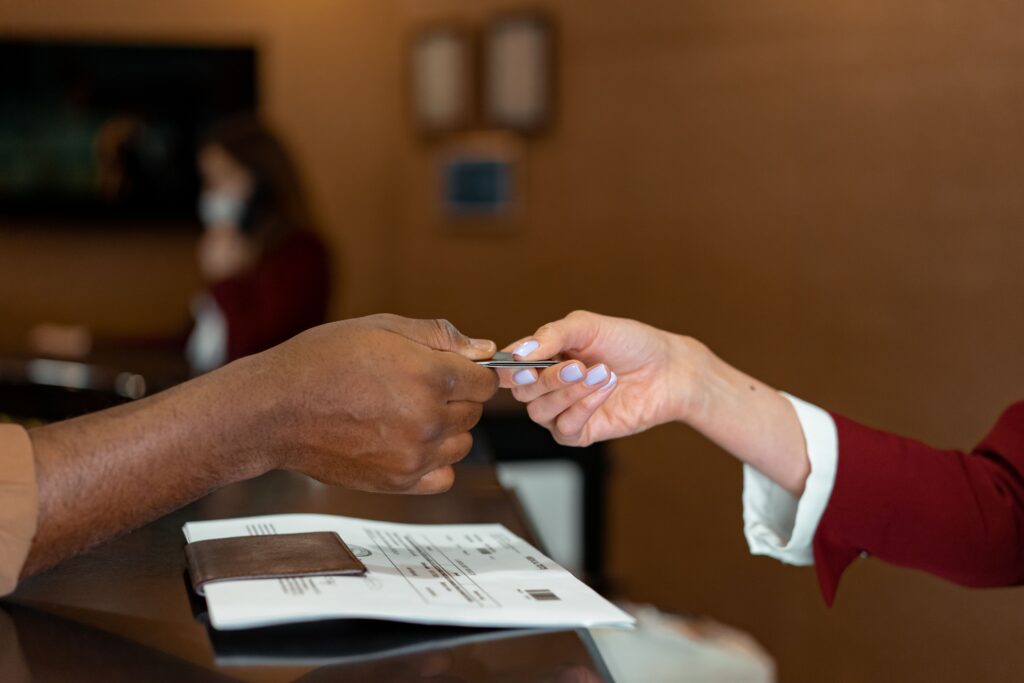
Nothing ruins a good hotel deal faster than reaching checkout and discovering another $150 in charges.
The biggest fees to check include:
Resort or destination fees: Common at resorts and increasingly found in some city hotels.
Parking: Downtown hotels can charge substantial nightly rates.
Breakfast: “Breakfast available” doesn’t mean breakfast is included.
Wi-Fi: Less common than it once was, but worth confirming.
Early check-in: Some properties charge for guaranteed early access.
Late checkout: Free for some guests, paid for others.
Extra-person fees: Particularly relevant for families and groups.
Local taxes: These can add considerably to the displayed nightly rate.
Pet fees: Some “pet-friendly” hotels still charge significant cleaning or nightly fees.
Before booking, look for the final price for the complete stay.
If the booking site doesn’t clearly show mandatory fees, check the property’s terms or contact the hotel.
Choosing the Right Location
I’d rather stay in a good three-star hotel in the right neighborhood than a beautiful five-star property in the wrong one.
Location affects almost everything.
Before booking, put the hotel on a map alongside your major attractions.
If everything you want to see is on the opposite side of the city, reconsider.
Proximity to Transport Hubs
Being close to transportation can be incredibly valuable.
In cities with excellent public transit, I often prioritize being within a short walk of a useful metro or train station.
But don’t automatically stay beside the airport just because you’re flying.
Airport hotels make sense for:
- Early departures
- Late arrivals
- Overnight connections
- Business near the airport
For a five-day city break, staying at the airport and commuting Downtown every day may be inconvenient.
Train stations require similar judgment.
A station can make day trips easier, but the surrounding neighborhood isn’t automatically the best place to stay.
Neighborhood Research
This is where I spend extra time before booking.
Look beyond the hotel’s own description.
Research:
- Safety
- Walkability
- Restaurants
- Public transportation
- Nightlife
- Noise
- Convenience stores
- Attractions
- Evening atmosphere
Recent guest reviews are particularly useful.
Search for words such as noise, location, safe, metro, walk, parking, construction, and neighborhood.
One negative review means very little.
Twenty recent guests complaining about nightclub noise until 3 AM tells you something useful.
Sustainable and Wellness-Focused Hotel Stays

Travelers are increasingly looking beyond thread count and swimming pools.
Sustainability and wellness have become meaningful parts of hotel selection.
On sustainability, look beyond vague claims that a hotel is “green.”
More meaningful practices can include energy efficiency, reduced single-use plastics, responsible water use, recycling, local sourcing, and credible environmental certification.
Wellness-focused hotels are also expanding beyond simply having a gym.
Depending on the property, you may find:
- Yoga
- Spa treatments
- Healthy menus
- Meditation
- Sleep-focused rooms
- Fitness classes
- Outdoor activities
- Bike rentals
- Thermal or hydrotherapy facilities
Don’t pay extra simply because a hotel uses the word wellness.
Check what you’re actually getting.
If you’ll never use the spa, yoga studio, or fitness classes, a cheaper hotel with a comfortable bed and good location may serve you better.
Smart Tools for Hotel Research
Hotel research becomes much easier when you use different tools for different jobs.
I use booking platforms for price comparison, maps for location, hotel websites for direct-booking benefits, and recent guest reviews for reality checks.
The most useful research stack looks something like this:
| Tool | Best Use |
|---|---|
| Hotel comparison sites | Comparing rates |
| Google Maps | Location and surroundings |
| Hotel’s official site | Direct rates and benefits |
| Recent guest reviews | Identifying recurring problems |
| Street-level imagery | Understanding the neighborhood |
| Travel guides | Choosing the right area |
| Loyalty program | Member rates and benefits |
Don’t rely on one review score.
An 8.7 versus 8.5 means very little without context.
Read what people are actually saying.
A hotel might lose points because rooms are small, which may not bother you at all.
But repeated complaints about cleanliness, construction, unreliable Wi-Fi, or serious noise deserve more attention.
Getting Upgraded Without Paying Extra

Hotel upgrades are never guaranteed unless you’ve actually booked and paid for a higher room category. Still, there are a few ways to improve your chances without being pushy at the front desk.
The first rule is simple: ask politely.
Something like, “If you happen to have any complimentary upgrades available, we’d really appreciate one” works much better than acting as though you’re entitled to a better room.
Join the Hotel’s Loyalty Program
If the hotel belongs to a major chain, joining its loyalty program before booking can be worthwhile.
Higher-tier members may receive complimentary upgrades when available, depending on the program and hotel.
Even entry-level membership can sometimes give you access to member rates or small benefits.
If you’re going to stay with the chain anyway, there’s usually little downside to joining a free program.
Book Directly When the Benefits Make Sense
Hotels generally have more control over reservations made through their own channels.
That doesn’t mean direct bookings automatically receive upgrades, but they may make it easier for the hotel to recognize loyalty status, preferences, and special requests.
Before booking, compare the direct rate with third-party prices.
If they’re identical, I usually lean toward booking directly, particularly when loyalty benefits are involved.
Mention Genuine Special Occasions
Honeymoon?
Anniversary?
Birthday?
Tell the hotel.
Don’t invent an anniversary just to get a bottle of wine. But if you’re genuinely celebrating something, add it to your reservation.
Hotels occasionally provide a small amenity, better view, room upgrade, dessert, or welcome note.
Again, expect nothing. Treat anything you receive as a bonus.
Check In at the Right Time
Checking in extremely early can sometimes work against you if you’re hoping for an upgrade because many rooms haven’t been cleaned or released yet.
Later in the afternoon, the front desk may have a clearer idea of which premium rooms remain available.
But there’s a trade-off.
Wait too late and another guest may already have received the room.
There’s no magic check-in time that guarantees an upgrade.
Stay During Quieter Periods
Availability matters more than any clever phrase you can say at reception.
A half-empty business hotel on Saturday may have plenty of better rooms available.
The same property during a huge conference may have nothing.
This is another reason traveling during shoulder season can be valuable.
You may get lower rates, fewer crowds, and potentially greater room availability.
Ask for What Actually Matters
“Upgrade” doesn’t always need to mean a suite.
Maybe you’d prefer:
- Higher floor
- Better view
- Quieter room
- Larger bed
- Balcony
- Room away from elevators
- Early check-in
- Late checkout
If a suite isn’t available, the hotel may still be able to improve your stay in another way.
Personally, I’d take a quiet room with a great view over a slightly larger room beside the elevator.
Package Deals: When Bundling Makes Sense
Flight-and-hotel packages can look attractive because the booking platform displays one combined price.
Sometimes they’re genuinely cheaper.
Other times, bundling simply makes it harder to understand what you’re paying for each component.
The only reliable way to know is to calculate both options.
Imagine you’re booking four nights in Miami.
| Booking Method | Flight | Hotel | Total |
|---|---|---|---|
| Separately | $320 | $720 | $1,040 |
| Package | Included | Included | $910 |
| Potential Saving | $130 |
In this example, the package clearly deserves consideration.
But price isn’t everything.
Check whether the hotel room is refundable, whether baggage is included, what flight times you’re receiving, and whether you’ll earn airline miles or hotel loyalty points.
When Packages Usually Make Sense
I’d look particularly closely at packages for:
- Beach vacations
- Resort destinations
- Short city breaks
- Family holidays
- Last-minute trips
- Popular leisure destinations
Bundling can also make budgeting easier because you’ve covered two of your largest expenses in one transaction.
When I’d Book Separately
Separate bookings may be better when you need flexibility.
For example, you might want a refundable hotel but be comfortable with a restricted airfare.
Or perhaps you’re using airline miles for the flight and hotel points for accommodation.
Business travelers and loyalty-program enthusiasts may also prefer direct bookings because certain third-party package reservations may not qualify for points, elite-night credits, or hotel status benefits.
Check the individual program terms before assuming you’ll earn rewards.
Don’t Forget Transfers
Packages sometimes include airport transportation.
That’s worth calculating.
If two travelers would otherwise spend $100 on round-trip airport transfers, a package including transportation could be better value even when the headline saving appears small.
Again, think about total trip cost.
A Few Hotel Booking Tricks I Actually Use

After comparing hotels, there are a few final checks I like to make before paying.
Check the Room Size
Hotel photographs can make a tiny room look enormous.
Look for the actual room size in square feet or square meters.
This matters particularly in cities such as London, Paris, Tokyo, and New York, where entry-level rooms can be compact.
For a two-night stay, I may not care.
For a week with two large suitcases, I definitely do.
Look at the Most Recent Reviews
A hotel’s reputation from three years ago doesn’t necessarily tell you what it’s like today.
Management changes.
Renovations happen.
Construction starts next door.
Service improves or declines.
I give more weight to recent reviews, especially recurring comments from the last few months.
Search Reviews for Specific Problems
Don’t read 500 reviews from beginning to end.
Search them.
I usually look for:
- Noise
- Clean
- Bed
- Shower
- Wi-Fi
- Breakfast
- Location
- Construction
- Air conditioning
- Parking
This quickly reveals patterns.
If 15 recent guests mention weak air conditioning and you’re visiting Rome in August, that’s relevant information.
Check the Cancellation Deadline
“Free cancellation” isn’t enough.
Until when?
A hotel might offer free cancellation until seven days before arrival. Another might allow cancellation until 6 PM the day before.
Those are very different levels of flexibility.
I save the cancellation deadline in my calendar whenever I’ve booked a refundable rate that I might reconsider.
Take Screenshots of Your Reservation
Keep your confirmation number and reservation details accessible offline.
I’d save:
- Hotel name
- Address
- Phone number
- Reservation number
- Room category
- Included benefits
- Check-in date
- Check-out date
- Amount paid
- Cancellation conditions
This can be surprisingly useful if you’re arriving internationally without immediate mobile data.
Final Thoughts: Elevating Every Stay
The best hotel booking isn’t necessarily the cheapest one.
It’s the stay that gives you the best overall value for the trip you’re actually taking.
That’s the mindset I’d use when approaching the TravelTweaks Hotels section or researching accommodation anywhere else.
Start with location.
Work out where you’ll spend most of your time and choose a neighborhood that makes your itinerary easier.
Then compare hotels within that area.
Look beyond the nightly rate and calculate the real cost:
Room + taxes + mandatory fees + parking + breakfast + transportation + extras.
Once you’ve narrowed down your choices, check recent reviews rather than relying entirely on the overall rating.
Look for recurring patterns.
One person complaining about breakfast doesn’t worry me. Twenty recent travelers mentioning dirty bathrooms probably would.
After that, compare direct booking against reputable third-party options.
A lower third-party price might be worthwhile. A slightly higher direct rate could be better if it includes breakfast, flexibility, loyalty points, or other useful benefits.
And don’t overlook your time.
I’ve seen travelers save $20 per night by staying far outside the center, then spend an extra $25 and two hours every day traveling back and forth.
That’s not really saving.
The same principle applies to upgrades and luxury amenities.
You don’t need the biggest room in the hotel.
You need the features you’ll actually use.
If you’re exploring Paris from 8 AM until midnight, paying hundreds more for a huge suite may not add much to your trip.
If you’re booking a Maldives honeymoon where you’ll spend most of your time at the resort, the room and resort facilities suddenly matter much more.
Your hotel should match your travel style, not somebody else’s idea of the perfect vacation.
That’s ultimately what smarter hotel booking looks like.
Compare carefully, read the conditions, understand the neighborhood, calculate the full price, and spend money on the parts of the stay that genuinely improve your trip.
Do that consistently and you won’t always book the cheapest hotel.
But you’ll get much better value from the hotels you do book.